Roofing contractors often judge direct mail by response rate: how many calls, scans, or leads came from the campaign. That matters, but it does not tell the whole story. A campaign can generate fewer leads and still produce more revenue if those leads turn into higher-value roofing jobs.
For example, imagine two contractors each spend the same amount mailing the same number of homes. One campaign generates five jobs, but only one is a roof replacement. The other generates three jobs, and all three are roof replacements. The second campaign produced fewer jobs, but it may have created considerably more revenue. That is why roofing contractors should look beyond response rate when evaluating direct mail.
The Type of Lead Matters
Roofing companies often sell more than roofs. Many also offer siding, windows, gutters, repairs, and other exterior work. Those can all be valuable projects, but they do not have the same average job value.
According to the 2025 Cost vs. Value Report, the estimated job cost for an asphalt shingle roof replacement in Madison, Wisconsin was $35,865. Vinyl window replacement was estimated at $21,094, while vinyl siding replacement was estimated at $19,407. Those numbers do not tell us how profitable each project is for a contractor, but they illustrate why the type of work generated by a marketing campaign matters. If the goal of a campaign is to generate roofing work, producing more roof replacement opportunities may be more valuable than simply producing the highest number of responses.
Using Roofing Permit Data to Improve Targeting
Many roofing direct mail campaigns start around a recently completed job. A contractor finishes a roof, selects the surrounding neighborhood, and sends postcards to nearby homeowners. The challenge is that not every home inside that radius represents the same opportunity.
If public permit records show that a house recently replaced its roof, that property may be a weaker roofing prospect than a nearby home without a recent roofing permit. That does not mean the homeowner cannot need siding, gutters, windows, repairs, or other work. It simply means the likelihood of another full roof replacement may be lower.
Where roofing permit data is available, contractors can use it as another signal when deciding which homes to target. Instead of treating every property inside a radius the same, a contractor can use the available information to make a more informed mailing list. Permit data is not perfect, and it cannot tell you exactly when a homeowner will need a new roof, but it can help identify properties that may be less attractive roofing prospects.
Measure the Entire Campaign
Calls, QR-code scans, landing-page visits, and form submissions are useful metrics, but they only show the first part of the campaign. Contractors should also look at what happens after someone responds.
A more complete direct mail funnel looks like this:
Mailers sent → Responses → Inspections → Sold jobs → Revenue → Gross profit
Following the campaign through the sales process gives contractors a clearer picture of whether the targeting actually worked. A campaign with a lower response rate may still outperform another campaign if it produces more sold roofing work or more valuable projects.
Attribution can also be difficult with direct mail because homeowners do not always respond through the exact method printed on the postcard. Someone might receive a mailer and later Google the contractor, call the main office number, ask a neighbor for the contractor's name, or hold onto the postcard for a few weeks before reaching out.
Because contractors know which addresses received the campaign, the property itself can become another attribution signal. If a mailed address later becomes an opportunity or sold job, that information can help contractors get a better picture of how much business the campaign actually created.
Start Around Completed Roofing Jobs
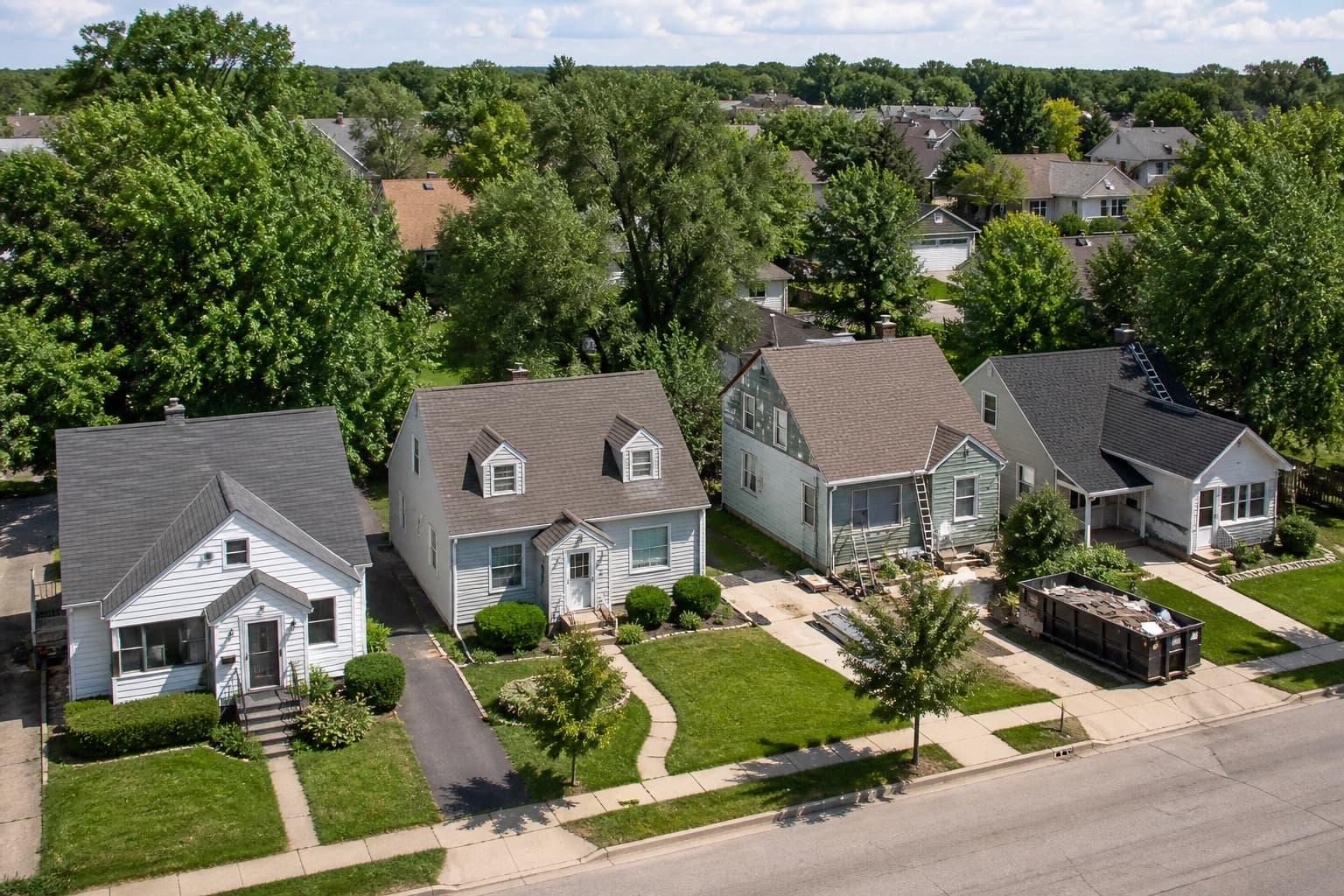
Completed roofing jobs provide a natural starting point for direct mail because there is already activity in the neighborhood. Nearby homeowners may have seen the crews, trucks, yard signs, dumpsters, or the roof being installed, which means the contractor may already have some visibility before a postcard ever arrives.
A completed job can therefore serve as a useful anchor for a radius mailing campaign. From there, contractors can begin learning which variables actually matter, such as how far from the job they should mail, how quickly the campaign should go out, which neighborhoods produce the most roofing opportunities, and whether filtering recently replaced roofs improves performance.
The answers will vary by market and contractor, which is why tracking campaign results over time matters.
Focus on Revenue, Not Just Responses
Direct mail is ultimately a customer acquisition channel, so the goal should not simply be to generate the most phone calls or QR scans. Contractors should be looking at what those responses eventually became and whether the campaign created profitable work.
Better targeting will not guarantee that every mailed homeowner needs a roof. However, using available property information, permit history, completed jobs, and campaign results can help contractors make more informed decisions about where they spend their marketing dollars.
The best roofing direct mail campaign may not be the one that generates the most leads. It may be the one that generates the most valuable work from the same budget.
©2025 Zonda Media, a Delaware corporation. Complete data from the 2025 Cost vs. Value Report can be downloaded free at CostvsValue.com.